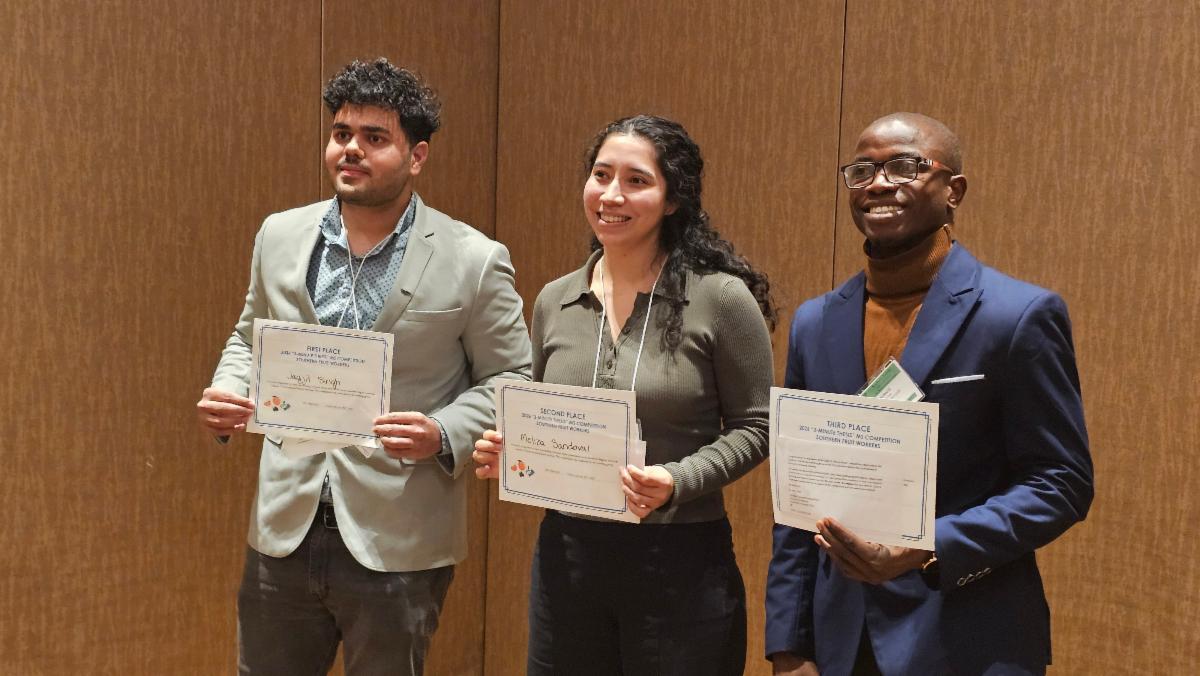
91¾«Ñ¡ graduate student Godswill Ujah earns third place in Louisville with
research on protecting genetic diversity in pawpaw cultivars
LOUISVILLE, Ky. — In three minutes — and with a single slide — 91¾«Ñ¡
graduate student Godswill Ujah delivered an award-winning presentation at the Southern
Region American Society for Horticultural Science annual meeting, held Jan. 31–Feb.
2, 2026, in Louisville.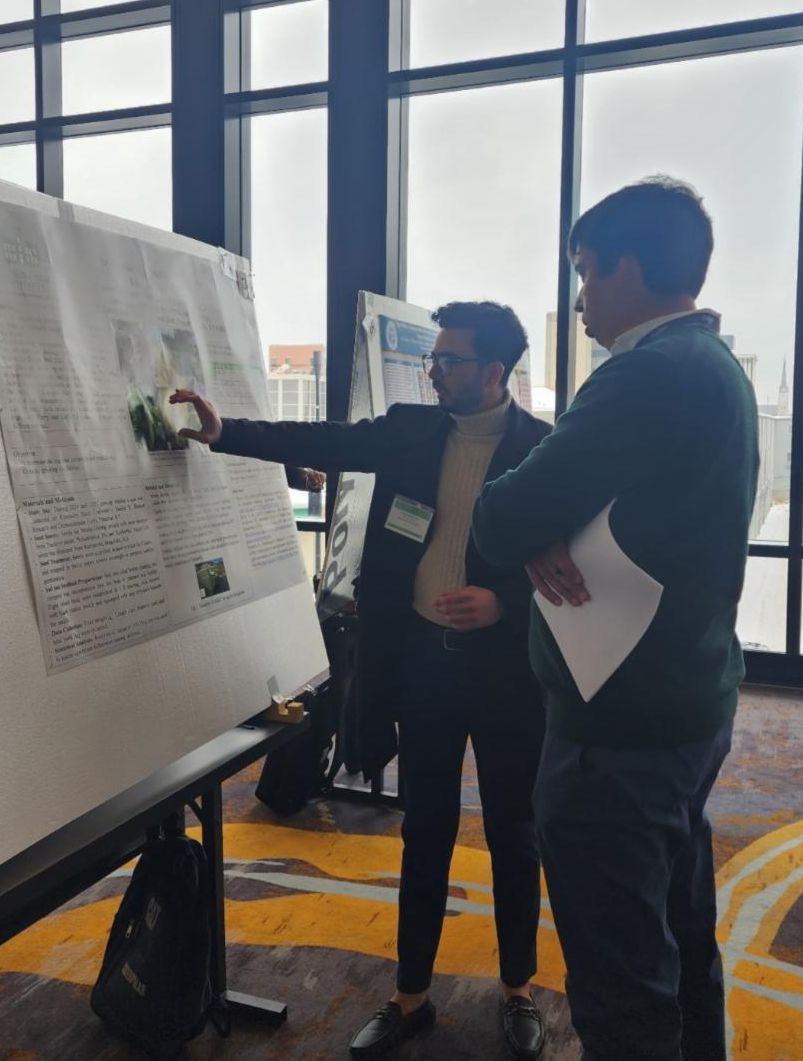 Ujah, a student in 91¾«Ñ¡â€™s master’s program in Environmental Science and
Technology, earned third place in the Southern Fruit Workers Group “3 Minute Thesis�
competition with a presentation titled “New Fruit, Old Mistakes: Avoiding the Banana
Trap with DNA Fingerprinting for Pawpaw.�
Ujah, a student in 91¾«Ñ¡â€™s master’s program in Environmental Science and
Technology, earned third place in the Southern Fruit Workers Group “3 Minute Thesis�
competition with a presentation titled “New Fruit, Old Mistakes: Avoiding the Banana
Trap with DNA Fingerprinting for Pawpaw.�
The competition challenges graduate students to present their thesis or dissertation
research in a concise, three-minute format using only one visual aid — emphasizing
clarity, accessibility, and strong science communication.
Ujah’s presentation highlighted how DNA fingerprinting can support the development
of pawpaw as an emerging fruit crop while helping expand and protect the genetic diversity
of pawpaw cultivars through 91¾«Ñ¡â€™s Pawpaw Research Program.
While the “3 Minute Thesisâ€� competition served as a centerpiece of 91¾«Ñ¡â€™s
presence at the meeting, the University was represented across additional student
and faculty sessions. 91¾«Ñ¡ graduate students also participated in the Norman
F. Childers M.S. Graduate Student Paper Competition, including:
- Pragyan Ghimire — “Effect of Beeswax and Paraffin Wax as Edible Coatings on the Quality and Shelf-Life of Pawpaw Fruit�
- Nabin Adhikari — “Verifying Parentage of Offspring from Crosses of the Pawpaw Cultivars Using Simple Sequence Repeat (SSR) Markers�
- Prabina Bhujel — “Molecular Evaluation of Selfing Patterns in the Pawpaw Cultivars Benson™ and Sunflower�
- Godswill Ujah — “Preliminary Genetic Diversity Assessment of 91¾«Ñ¡-Released Pawpaw Cultivars Using Microsatellite Markersâ€�
- Muhammad Arslan — “Luffa: A Multipurpose Vegetable for Small Farmers in Kentucky�
- Jonish Chand — “Interaction of Liquid Organic Fertilizer with Light and Substrates on Propagation of Lettuce Under Controlled Environment�
91¾«Ñ¡â€™s pawpaw leadership was also featured through faculty and research
associate presentations. Dr. Kirk Pomper, the University’s Pawpaw Program leader,
shared an update on breeding efforts in the United States and internationally, while
research associates Sheri Crabtree and Jeremy Lowe presented on conference outcomes
and fruit-weight selection in 91¾«Ñ¡â€™s pawpaw breeding program.
For more information about 91¾«Ñ¡â€™s Pawpaw Program and ongoing research, contact kirk.pomper@kysu.edu.